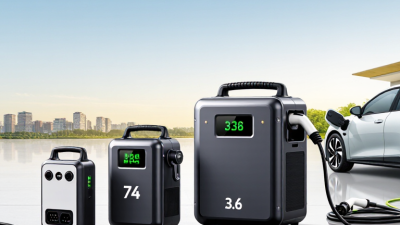
China Top ChargePoint EV Charger Manufacturers and Suppliers
Choosing a reliable Chargepoint Ev Charger supplier involves more than comparing prices and catalog photos. Buyers need to match charger type, power output, connector, and installation setting to actual project requirements. A compact AC unit beside an office parking bay serves a different purpose from a high-output DC charger at a highway stop. Details matter.
China has a broad network of EV charging equipment manufacturers and suppliers, including companies offering design, production, and private-label services. Their capabilities vary. Some focus on residential wallboxes, while others build commercial chargers with network controls and remote monitoring. When assessing a supplier, review product specifications, factory quality procedures, warranty terms, and support arrangements. Ask for clear documentation on communication protocols, payment options, operating temperature, and maintenance access. These points can affect daily use as much as peak charging speed.
The name “ChargePoint” may refer to a specific charging brand, so buyers should confirm branding, authorization, and system compatibility directly with the relevant companies. A similar-looking unit is not automatically an approved product. Not every unit fits. Request current test reports and sample configuration details, then check whether the quoted model meets the intended market’s requirements. Supplier claims deserve careful review, especially when delivery schedules or performance figures seem unusually optimistic. This guide introduces notable Chinese manufacturers and suppliers, explains what to compare, and highlights questions worth asking before a purchase. A careful shortlist can reduce surprises, though no checklist replaces a site assessment.
Overview of China’s EV Charger Manufacturing Industry
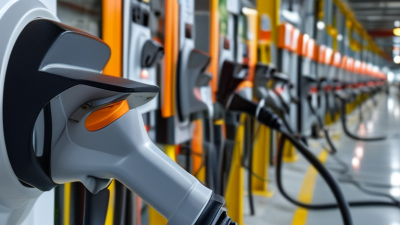
China’s EV charger manufacturing industry brings together electronics, power-conversion equipment, metal fabrication, and software integration. Factories produce both compact AC units for homes and higher-power DC systems for commercial sites. A charger’s cabinet may look simple, but inside it are power modules, circuit boards, cooling parts, and communication hardware. Small design choices matter.
Manufacturing often depends on a coordinated supplier network. Local access to cables, connectors, printed circuit boards, and sheet-metal parts can help shorten production cycles. Some facilities assemble products on flexible lines, then run checks for electrical output, insulation, temperature control, and communication stability. Test conditions should reflect real use, including repeated charging and hot, humid environments. Results still depend on the model and the factory’s quality process.
Details matter. Buyers comparing suppliers can ask how components are traced, how defects are handled, and whether production samples match tested units. Documentation and consistent inspection are useful signs, though they do not guarantee every shipment will perform identically. The industry also faces practical trade-offs: faster production can strain inspection capacity, while frequent customization may complicate repairs. That tension deserves more attention. A charger that works well in a laboratory may still need thoughtful installation, maintenance, and user feedback in the field.
Main Types of EV Chargers and Their Applications
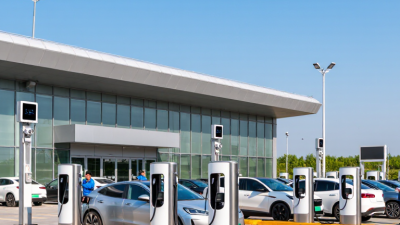
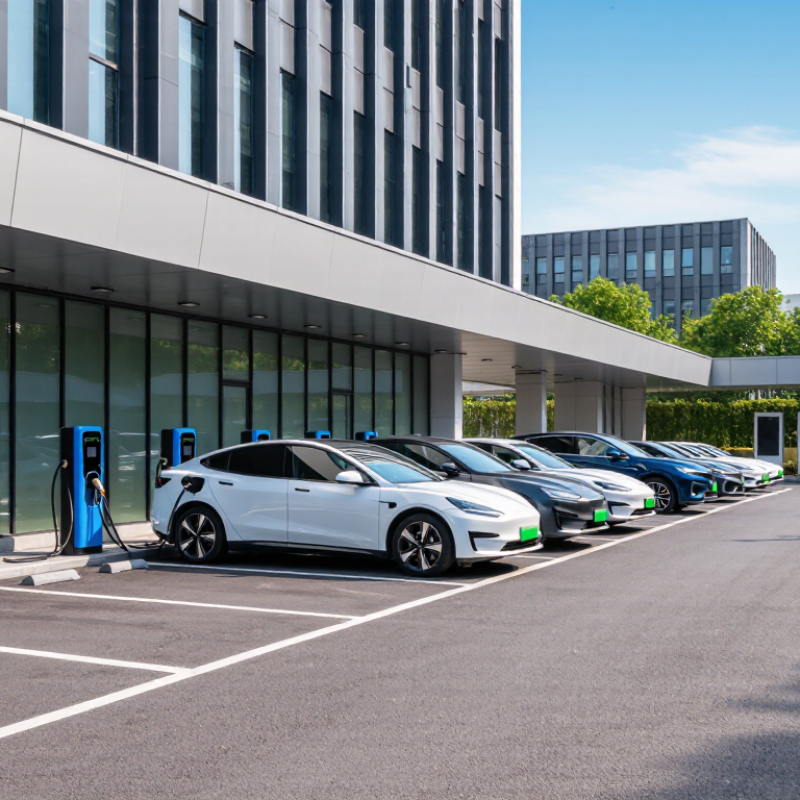
EV chargers are generally divided into AC chargers and DC fast chargers. AC models suit places where vehicles remain parked for several hours. At home, overnight charging can restore much of a car’s daily driving range. In offices and public parking areas, shared AC units let drivers top up while they work or shop. Installation details matter: cable reach, parking layout, and available electrical capacity affect everyday use. Small details matter.
DC fast chargers convert power before it reaches the vehicle, enabling much quicker charging when the vehicle supports it. They are common along highways, near busy travel routes, and at fleet depots where vehicles need shorter stops. A driver might add energy during a meal break, though charging speed can slow as the battery fills. Fast does not always mean fastest.
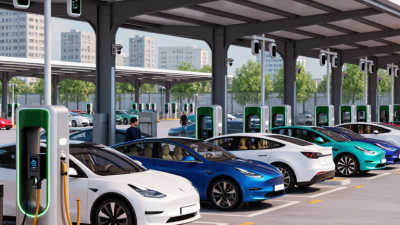
The right type depends on dwell time, traffic patterns, vehicle compatibility, and site power. A residential garage may need one dependable AC outlet, while a highway site may require multiple high-power DC units and room for vehicles to queue. Operators should check connector compatibility and expected daily demand before choosing equipment. One awkward reality remains: actual charging times vary with temperature, battery condition, and the vehicle’s charging limits.
China Top ChargePoint EV Charger Manufacturers and Suppliers: Main EV Charger Types and Applications
Charging power varies by charger model, electrical supply, and vehicle capability. AC chargers rely on the vehicle’s onboard charger, while DC fast chargers supply power directly to the battery. The values shown are representative examples, not fixed limits.
Leading Chinese EV Charger Manufacturers and Suppliers
Leading Chinese EV charger manufacturers and suppliers serve a fast-growing market shaped by domestic deployment and export demand. The International Energy Agency’s Global EV Outlook 2024 reports that China held about 70% of the world’s public charging points in 2023. That scale supports broad production capacity, but volume alone does not prove quality. Buyers should examine output testing, component traceability, and documented performance under heat, rain, and repeated charging cycles. Small details matter.
Suppliers differ in charger power ranges, software integration, and after-sales support. For procurement teams, compare independently verified safety and efficiency data, warranty terms, spare-part availability, and response times for remote diagnostics. Ask how products are tested across grid conditions and connector configurations in the target market. The IEA also notes the growing importance of fast charging as EV adoption rises, making thermal management and stable power delivery practical evaluation points. A specification sheet can look complete. Field performance may still vary. Request pilot data from installations with similar climates and usage patterns, and check whether service teams can support commissioning and maintenance locally. Some suppliers provide limited evidence for long-term reliability; that gap deserves careful review.
Manufacturing Standards, Certifications, and Quality Controls
Reliable EV charger production begins with standards that match the intended market. In China, suppliers should verify applicable GB/T requirements and test relevant equipment against IEC 61851 charging-system safety provisions. ISO 9001 supports consistent quality management, but it does not certify a charger’s electrical performance. The IEA’s Global EV Outlook 2024 reports that public charging points worldwide grew by more than 40% in 2023, surpassing four million. That expansion makes dependable testing more important, not less.
A capable factory checks incoming cables, connectors, circuit boards, and enclosures before assembly. On the line, technicians can record torque values, insulation resistance, grounding continuity, and temperature-rise results. Finished units should undergo functional and protective-fault tests, with serial-number records linking results to production batches. These controls reveal defects early. Still, a clean test report cannot prove long-term reliability by itself; field feedback and corrective-action records matter too. Small details matter.
Tips: Ask suppliers for current, scope-matched certificates, sample test reports, and calibration records. Check whether the tested model matches the quoted model. If a factory cannot explain how failed units are isolated and retested, that deserves a closer look.
How to Evaluate and Select a Chinese EV Charger Supplier
China Top ChargePoint EV Charger Manufacturers and Suppliers
How to Evaluate and Select a Chinese EV Charger Supplier
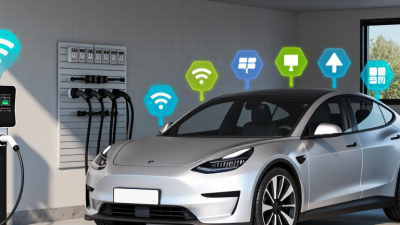
Choosing an EV charger supplier takes more than comparing prices. Check whether the supplier can explain charging power, connector options, enclosure ratings, and communication protocols in clear terms. Ask for test reports tied to the exact model you plan to purchase. A sample unit can reveal practical details, such as cable stiffness, screen readability in sunlight, and how neatly internal wiring is arranged. Ask for evidence. A confident sales presentation is useful, but it cannot replace technical documentation.
Tips: Request a product specification sheet, warranty terms, and a sample inspection checklist. Confirm what the supplier tests before shipment. Test real units. Small omissions can matter.
Assess production consistency and after-sales support, too. Ask how faults are recorded, who handles technical questions, and whether replacement parts are available. If possible, review a factory audit or arrange a video inspection of the assembly and testing areas. Compare lead times against realistic production schedules, not only quoted estimates. A low price may look attractive, yet unclear warranty exclusions can add cost later. Supplier evaluation is not perfectly tidy; documents may be incomplete, and one inspection cannot prove long-term reliability. Record open questions, request written answers, and revisit any assumption that feels too easy.