Choosing the right Chargepoint Ev Charger is not simply a matter of comparing charging speed and price. Global buyers must examine vehicle compatibility, local electrical standards, connector types, and installation conditions. A charger that performs well in a European garage may require different wiring or approvals in North America, Asia, or Australia. The details matter.
Practical experience begins with the parking space. Measure the cable distance, inspect the electrical panel, and check whether outdoor exposure is expected. A 7.4 kW unit may suit a home with limited capacity, while a higher-powered model could require a costly electrical upgrade. Buyers should confirm maximum vehicle acceptance, phase requirements, residual-current protection, and smart-load management before ordering. Professional installation remains essential. Online specifications cannot replace an electrician’s assessment.
Reliable purchasing also involves warranty terms, software support, replacement parts, and regional customer service. Verify the manufacturer’s technical documentation and applicable safety certifications. Ask whether the charger supports scheduled charging, energy monitoring, and integration with solar systems. These features can reduce daily costs, but only when the local network and vehicle support them.
No single checklist is perfect. Real projects often reveal overlooked issues, such as a short cable, weak Wi-Fi, or unclear app permissions. That is why global buyers should compare the complete ownership experience, not only the product label. A careful decision balances safety, convenience, future vehicle needs, and installation cost. The best charger is not always the fastest one. It is the one that works reliably where it is installed.
Choosing an EV charger begins with the vehicle, not the charger’s advertised speed. Check the car’s maximum AC input, DC charging capability, connector type, and battery size. A 7.4 kW onboard charger cannot use 22 kW effectively. The extra capacity may sit idle.
Daily mileage also matters. The International Energy Agency’s Global EV Outlook 2024 reports nearly 4 million public charging points worldwide at the end of 2023. Yet access differs sharply between cities, workplaces, apartments, and rural roads. Estimate energy use from real driving, weather, traffic, and payload. Then add a practical buffer, not an oversized promise.
Think beyond the socket. Regional electrical systems, connector standards, installation rules, and smart-charging functions can affect compatibility. The Society of Automotive Engineers and the International Electrotechnical Commission publish widely used charging standards, but local implementation still requires verification. A qualified installer should confirm circuit capacity, earthing, protection devices, and cable length.
Small details matter.
For example, a driver returning home with 25% battery may need only overnight AC charging. A taxi, delivery van, or shared vehicle may need rapid DC charging between shifts. A charger with remote monitoring can support fleet records, but poor connectivity may reduce its value. A neat spreadsheet can still be wrong. Recheck actual charging sessions after installation, because rated power is not the same as delivered energy.
Define your charging needs and check vehicle compatibility before selecting charging power.
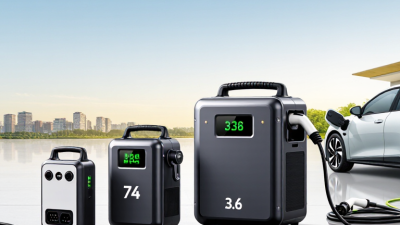
The chart compares common charging power levels with the approximate time required to add 36 kWh of energy. The estimate assumes around 90% charging efficiency and is intended for general planning. AC charging depends on the vehicle’s onboard charger, while DC fast charging depends on the vehicle battery system and charging inlet. Always confirm the applicable regional connector standard and the vehicle’s maximum supported power.
When choosing an EV charger for global buyers, compare charger types before comparing prices. AC Level 1 units usually deliver 1.4–2.4 kW through a standard household outlet. They suit overnight charging, small fleets, and locations with limited electrical capacity. AC Level 2 chargers commonly provide 3.7–22 kW. A 7.4 kW unit can add useful range during a workday, while an 11 or 22 kW unit requires suitable three-phase infrastructure in many regions. Check local voltage, frequency, connector standards, and certification requirements.
DC fast chargers typically range from 25 kW to over 300 kW. They can recharge vehicles during shopping stops or highway breaks. However, vehicle acceptance limits matter. A 150 kW charger cannot force a vehicle to accept 150 kW. Charging may also slow after the battery reaches a high state of charge. Heat, cable length, airflow, and grid demand affect real performance. The nameplate rating is only part of the story.
Site conditions deserve careful attention. A compact apartment garage may need load management, payment access, and a weather-resistant enclosure more than extreme power. A roadside site may need dual connectors, clear lighting, and dependable uptime. Higher power is not always better. It can increase installation costs and demand charges. A practical mistake is selecting the fastest charger before checking the transformer and parking time. I would review twelve months of energy data when possible, then compare power, maintenance access, warranty terms, and regional support. Perfect planning is rare. A measured choice usually performs better.
Regional standards should guide every charger decision. A unit designed for one market may not meet another region’s safety requirements. Check local certification rules before comparing price or charging speed. Confirm voltage, frequency, phase type, and maximum current with a qualified electrician. These details affect installation safety and long-term performance.
Connectors also vary by country and vehicle type. Common options include Type 2, CCS, CHAdeMO, and North American charging connectors. Compatibility is not only about the plug shape. Communication protocols, locking systems, and charging limits can also differ. A connector may fit physically but still charge incorrectly. Field checks often reveal this mistake.
Tips: Ask for certification documents, wiring diagrams, and connector specifications. Measure the site’s available power before ordering. Leave space around the charger for ventilation and maintenance. If the electrical supply seems uncertain, pause the purchase. A local installer can verify the panel, grounding, protection devices, and cable size. I would not rely on an online compatibility chart alone. Some information becomes outdated, and small regional differences matter. Also, remember that a higher-rated charger cannot create more power than the building can safely provide.
Global buyers should judge an electric vehicle charger by daily behavior, not attractive feature lists. Smart controls matter when they solve a real household problem. Look for scheduled charging, dynamic load balancing, energy reports, and remote fault alerts. These tools can reduce peak demand and prevent a charger from overloading an older home circuit. Useful, not flashy. App quality also matters. A clear interface should show charging status, energy use, and error messages without technical confusion.
Connectivity deserves careful testing before purchase. Wi-Fi may fail in a concrete garage, while Ethernet or cellular backup can provide greater stability. Check whether the charger supports common communication standards and receives secure firmware updates. Data handling should be transparent, especially for users comparing regional privacy requirements. During evaluation, test the signal from the parking space, not the living room. Small details often decide reliability.
Installation depends on local voltage, plug design, cable length, wall material, and available electrical capacity. Ask a qualified electrician to inspect the circuit before ordering. Outdoor buyers should verify weather resistance, temperature limits, and cable flexibility in winter. Support should include readable manuals, responsive technical staff, spare-part availability, and clear warranty terms. Some sellers promise global assistance, but response times can vary sharply by country. That weakness deserves honest consideration. A charger may look advanced yet remain frustrating if installation guidance is vague or repairs require overseas shipping.
| Evaluation Dimension | Entry-Level AC Charger | Connected AC Charger | Commercial DC Fast Charger | What Global Buyers Should Check |
|---|---|---|---|---|
| Primary Use | Home overnight charging and private parking | Homes, workplaces, hotels, and managed parking | Public charging, fleets, highways, and high-turnover sites | Match charging speed with dwell time, daily mileage, and site traffic. |
| Charging Technology | AC charging through the vehicle's onboard charger | AC charging with monitoring, scheduling, and load management | DC power supplied directly to the vehicle battery | AC is generally suitable for long parking periods; DC is better where rapid turnaround is essential. |
| Typical Rated Output | 3.6–7.4 kW AC for common single-phase installations | 7.4–22 kW AC, subject to vehicle and electrical supply limits | 50–350 kW DC, depending on site capacity and vehicle compatibility | The vehicle, connector, grid connection, cable rating, and local regulations may limit actual power. |
| Regional Electrical Supply | Usually single-phase supply | Single-phase or three-phase supply | Dedicated three-phase supply is commonly required | Confirm voltage, frequency, earthing arrangement, breaker rating, and grid-connection rules in the destination country. |
| Common Connector Options | Type 2 or Type 1 AC, depending on region and vehicle | Type 2 or Type 1 AC; tethered or socketed design | CCS2, CCS1, CHAdeMO, or other region-specific configurations | Select the connector used by the target vehicle market; connector availability varies by country and vehicle generation. |
| Core Smart Features | Basic status indicators and start/stop control | Charging schedules, energy records, remote control, fault notifications, and user access management | Remote diagnostics, dynamic power allocation, session management, payment integration, and utilization reporting | Prioritize features that reduce energy costs, improve uptime, and simplify multi-site operation. |
| Connectivity | May operate offline; local Bluetooth or Wi-Fi may be available | Wi-Fi, Ethernet, Bluetooth, or cellular connectivity | Ethernet and cellular connectivity are commonly used for operational reliability | Check network coverage, SIM management, roaming costs, API access, and offline behavior. |
| Backend Compatibility | Often limited or unavailable | OCPP 1.6J is widely used; OCPP 2.0.1 may be available | OCPP 1.6J or OCPP 2.0.1, depending on the management platform | Open protocols can reduce dependence on a single software provider and support future platform changes. |
| Load Management | Usually manual power selection | Dynamic load balancing and scheduled charging may be supported | Site power sharing, peak-load control, and integration with energy management systems | Load management can help avoid costly electrical upgrades and reduce demand peaks. |
| Installation Requirements | Dedicated circuit, protective devices, suitable cable, and qualified installation | Dedicated circuit, residual-current protection, network setup, and commissioning | Civil works, foundations, distribution equipment, protection systems, cooling, and utility approval may be required | Obtain a site survey before purchase and verify compliance with local electrical and construction codes. |
| Safety and Compliance | Overcurrent protection, temperature monitoring, and ground-fault protection | The same protections plus user authentication and event logging | Advanced electrical protection, emergency stop, insulation monitoring, and thermal management | Request applicable conformity documents, test reports, ingress ratings, and regional certifications. |
| Weather and Environmental Protection | Outdoor models commonly use weather-resistant enclosures | Outdoor-rated enclosure, impact protection, and operating-temperature specifications | Robust enclosure, cable management, cooling system, and protection against dust, rain, and impact | Review IP and IK ratings, temperature range, altitude limits, corrosion protection, and snow or flood exposure. |
| Payment and Access Control | Physical access or simple plug-and-charge use | Mobile application, RFID, PIN, or private-user access | RFID, mobile payment, contactless payment, roaming, and tariff management may be supported | Confirm local payment regulations, currency support, tax reporting, and data-protection obligations. |
| Energy Management Integration | Usually not available | May support solar-aware charging, smart meters, or home energy management | May integrate with site energy management, battery storage, solar generation, and demand-response programs | Check API availability, meter accuracy, control intervals, and compatibility with local energy tariffs. |
| Maintenance and Support | User manual, remote troubleshooting, and replacement parts | Remote monitoring, firmware updates, installation guidance, and service escalation | Service-level agreements, spare-parts logistics, field service, remote diagnostics, and uptime reporting | Evaluate response times, local technicians, warranty coverage, training, firmware policy, and parts availability. |
| Best Selection Criteria | Simple operation, correct connector, safety compliance, and suitable circuit capacity | Open communication protocol, reliable connectivity, load balancing, and usable software | High uptime, scalable power architecture, payment capability, service network, and total cost of ownership | Compare the complete lifecycle cost: hardware, installation, electricity, software, maintenance, and downtime. |
Note: Actual charging performance depends on the vehicle's onboard charger, battery state of charge, ambient temperature, connector type, electrical infrastructure, and local regulations.
Choosing an electric vehicle charger depends on your budget, parking space, and daily driving pattern. A lower-cost model may suit a home user who drives 30 miles daily. A higher-output charger makes more sense for shared parking or frequent long trips. Check your property’s voltage, available amperage, and circuit capacity before comparing prices. A certified electrician should verify these details.
Location changes the decision. Outdoor installations need strong weather protection, secure cable storage, and resistance to dust or moisture. In colder regions, inspect the operating temperature range. In apartments, confirm whether the charger supports load management and user access controls. Global buyers should also check plug compatibility, local electrical requirements, warranty coverage, and service availability. These details often matter more than charging speed.
Tips: Measure the cable path before ordering. A short cable can be frustrating beside a narrow driveway. Choose smart scheduling if electricity prices vary during the day. Avoid paying for maximum power if your vehicle cannot accept it. I once focused too heavily on charging speed and overlooked installation cost. That was a useful mistake. Leave room in your budget for wiring, protection equipment, and professional setup. Think beyond the purchase price.