Electric mobility is entering a more demanding phase. The International Energy Agency’s Global EV Outlook 2025 reports that global electric car sales exceeded 17 million in 2024, representing more than one-fifth of new car sales. This growth is changing how drivers evaluate charging equipment. A Portable Ev Charger is no longer merely an emergency accessory. For apartment residents, fleet operators, and travelers, it can provide practical flexibility when fixed charging is unavailable.
Real-world charging needs remain highly variable. The U.S. Department of Energy’s Alternative Fuels Data Center distinguishes charging equipment by power level, connector, and electrical supply. These details directly affect charging speed, installation requirements, and vehicle compatibility. A compact 3.6-kilowatt unit may suit overnight charging from a household outlet. A 7.4-kilowatt model can offer more capacity, but only where the circuit supports it. Higher output is not automatically better.
Safety matters more than advertising claims.
This 2026 buying guide compares portable EV chargers through verified specifications, practical testing considerations, and regional requirements. It examines connector standards, input voltage, current adjustment, weather resistance, cable durability, residual-current protection, and warranty support. International buyers should also check local certification marks, outlet types, and grid conditions before purchasing. Reports from the IEA and national energy agencies provide useful market context, but they cannot replace the vehicle manual or a qualified electrician’s assessment. Some product listings still blur “portable” with “universal,” which can mislead buyers. That weakness deserves attention. A reliable purchase should balance charging performance, transportability, electrical safety, and long-term service—not simply the lowest price or highest advertised amperage.
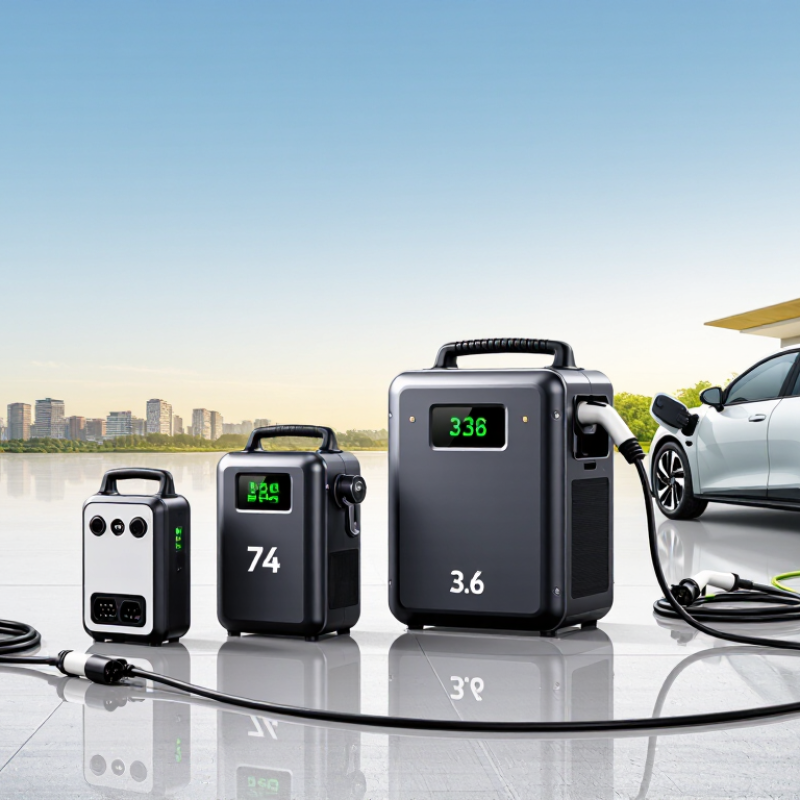
A portable EV charger is a compact electric vehicle supply device that delivers AC power through a suitable outlet. It usually includes a control box, charging cable, vehicle connector, and safety monitoring. Its purpose is practical: provide flexible charging at home, work, hotels, or roadside locations when a fixed wall unit is unavailable.
It is not a simple extension cord. Never treat it like one.
Most portable chargers use Mode 2 charging. They connect to a standard outlet and include in-cable protection against leakage, overheating, and abnormal current. Charging is convenient, but usually slower. Mode 3 equipment connects to an AC charging station and can support higher, more controlled power. Some portable units offer adjustable current settings, such as 8, 10, or 16 amps. Lower settings may protect older household circuits, although they increase charging time.
Portable DC chargers also exist, but they are heavier, more expensive, and technically demanding. Their output can be much faster, yet their usefulness depends on vehicle compatibility, battery limits, and available power. Global buyers should check voltage, plug shape, connector type, frequency, and local certification requirements. A 120-volt outlet behaves differently from a 230-volt circuit. Confirm the circuit rating first.
In real use, cable length, rain protection, heat, and storage matter more than glossy specifications. A long cable can reach a driveway socket, but it becomes awkward to carry. I have found that charging speed claims often assume ideal conditions. They may disappoint in winter, weak circuits, or crowded electrical systems. A qualified electrician should inspect permanent wiring.
A portable EV charger is usually a mobile AC charging unit, not a fast DC station. Its power rating matters most. A 7.4 kW unit can deliver about 30 miles of range per hour, depending on vehicle efficiency and weather. An 11 kW model needs suitable three-phase supply and household wiring.
The IEA’s Global EV Outlook 2025 reported more than 17 million electric car sales in 2024, with electric vehicles exceeding 20% of global car sales. That growth makes compatibility less forgiving. Check the vehicle connector, local plug type, voltage, phase, and maximum onboard charging rate. The U.S. Department of Energy’s Alternative Fuels Data Center also stresses connector compatibility across charging systems. A higher-rated cable cannot force a vehicle to accept more power.
Safety specifications deserve close attention. Look for residual-current protection, over-temperature control, ground monitoring, and compliance with IEC 61851-1 or the relevant regional standard. Choose a cable with useful length, strong strain relief, and at least weather-resistant protection for outdoor use. IP ratings need context; IP65 resists dust and water jets, but it does not permit immersion. Weight matters too. A 6-kilogram unit may feel reasonable in a garage, then awkward beside a roadside socket.
I would not chase maximum power automatically. Portable charging often depends on old wiring, loose outlets, and uncertain earthing. My checklist is still imperfect there. A professional electrical inspection can reveal problems that product specifications cannot.
Choosing a portable EV charger in 2026 starts with the vehicle, not the cable length. Battery electric vehicles usually accept higher charging power than plug-in hybrids. Check the vehicle’s maximum AC input before paying for a higher-rated unit. Extra capacity may add cost without reducing charging time.
Regional power systems need equal attention. A charger designed for 230 volts may not work safely with a 120-volt supply. Frequency, socket shape, grounding, and breaker capacity also vary between countries. Match the connector to the vehicle inlet, such as Type 1 or Type 2. Confirm compatibility with the charging mode as well. Never rely on a cheap travel adapter for continuous high current.
Small details matter. Choose adjustable current settings for older homes, campsites, or shared apartments. A clear display should show voltage, current, temperature, and charging errors. Look for built-in residual-current protection and strong cable strain relief. Outdoor users should check the enclosure rating, especially near rain, dust, or snow. Keep the control box off wet ground.
Testing the wall outlet before travel is practical. A qualified electrician can verify grounding and circuit limits. I once underestimated how quickly a warm socket could become a serious warning. Do not ignore heat, burning smells, or repeated interruptions. Some chargers advertise universal use, but no device fits every vehicle and power system perfectly. Recheck local installation and transport requirements before crossing borders.
Safety starts with matching the charger to local electrical conditions. A portable EV charger should follow relevant standards, such as IEC 61851 for charging equipment. Household installation may also involve IEC 60364 or equivalent national rules. In North America, buyers should check applicable electrical safety certification and local code requirements. In Europe, verify valid CE conformity documentation, not just a printed symbol. Other markets may require different approval marks, testing, or registration.
Look for protection against overcurrent, overheating, leakage, and poor grounding. A residual-current device, or RCD, can reduce shock risk. Some chargers include this protection, but the home circuit may still need a separate device.
Check the plug type, rated current, voltage, IP rating, and operating temperature. A warm garage, wet driveway, or long extension cable can change the risk. Never assume a universal adapter makes an installation compliant.
Tips: Ask the seller for a declaration of conformity, test reports, and clear model numbers. Confirm that the documents match your exact charger, not a similar product. Use a licensed electrician when installing a dedicated circuit. Test the wall outlet before regular use. I have found that manuals often hide important limits in small tables. That is easy to miss. Recheck local requirements before purchase, because certification rules and grid practices can change.
A portable EV charger should fit your real driving routine, not just its product photos. Check its weight, cable length, plug design, and storage case. A unit that weighs three kilograms may feel manageable at home but awkward after a long road trip. Short cables create problems near crowded parking spaces. Choose a model compatible with your vehicle and the electrical standards in your destination region. Ask an experienced installer to confirm outlet capacity before regular use.
Durability matters when chargers face rain, dust, hot asphalt, and repeated cable bending. Look for clear water-resistance ratings, reinforced connectors, temperature protection, and strain relief near the plug. In practical use, a sturdy handle and readable display can prevent mistakes at night. Yet “rugged” labels are not enough. Review testing details, safety certifications, and user reports from different climates. Small weaknesses often appear after months, not during a showroom demonstration.
Cost includes more than the purchase price. A cheaper charger may need an adapter, stronger outlet, or earlier replacement. Compare charging speed, energy monitoring, repair options, and included accessories. Warranty length matters, but coverage conditions matter more. Read exclusions for cable damage, moisture, and unauthorized repairs. Reliable support should provide clear manuals, response channels, spare parts, and regional service. Ask one technical question before buying. The quality of that reply can reveal future support problems. My own buying mistake was focusing too heavily on price; convenience became expensive later.