Choosing a Home Ev Charging Station is not simply a matter of comparing charging speeds. The unit must suit the vehicle, household wiring, parking space, and daily routine. A cable that reaches the driveway without crossing a walkway can matter as much as a higher power rating. So can clear app controls and dependable support.
EV charging journalist and product tester Tom Moloughney, known for his State of Charge reviews, regularly evaluates chargers through hands-on testing. His work reflects a useful principle: buyers should compare real-world performance and installation needs, not rely on headline specifications alone. That distinction matters when reviewing China’s leading manufacturers. Product quality, connector options, safety features, software, warranty terms, and service availability can vary widely. A polished product page is not enough.
This guide examines ten Chinese manufacturers of home charging stations and the details that help separate practical choices from marketing claims. It considers where each company operates, what its products offer, and which buyers may find them suitable. Some information can change quickly, especially software support and regional availability. Check current specifications before deciding. Small details matter. A charger mounted outdoors faces rain, heat, dust, and repeated handling. The right choice should fit the home—not just look impressive in a comparison table.
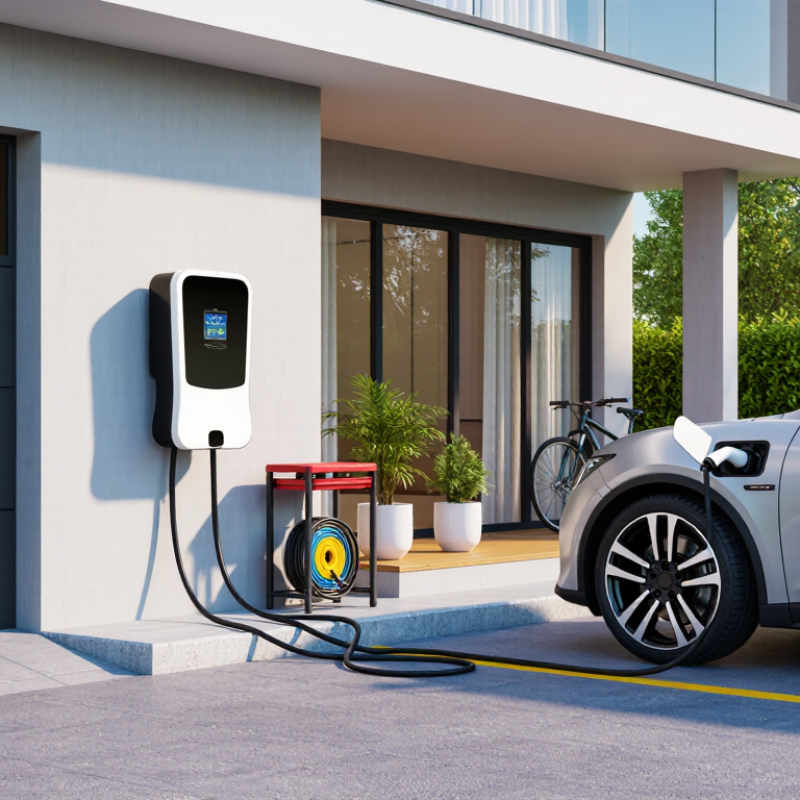
China’s home EV charging station industry has grown alongside electric vehicle adoption and a deep electronics supply chain. Manufacturers can draw on local expertise in power modules, circuit protection, connectors, and communication hardware. That combination supports a wide range of residential chargers, from compact wall-mounted units to higher-output systems for private garages.
Practical details matter at home. A charger must fit the household’s electrical capacity, cable route, and parking layout. Some units offer scheduled charging, app controls, or load balancing, which can help households avoid overloading a busy circuit. Installation quality still matters. A well-designed device cannot compensate for unsuitable wiring or poor commissioning.
The market is not perfectly uniform. Product specifications, testing evidence, software support, and export readiness may differ between suppliers. Buyers and importers should review safety documentation, warranty terms, connector compatibility, and after-sales arrangements rather than relying on a brochure alone. Small print counts. Factory audits and sample testing can reveal gaps, though they take time and add cost. The industry’s scale is impressive, but dependable home charging still depends on careful engineering, clear documentation, and installation suited to each property.
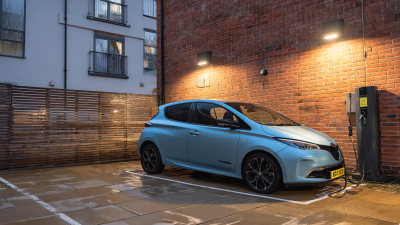
Residential EV chargers usually come in two forms: portable units and fixed wall-mounted units. Portable chargers are easy to store and can use a suitable household outlet, though charging is often slow. Fixed AC chargers connect to a dedicated circuit and typically deliver more power. Available voltage and plug standards vary by market, so product specifications should match the home’s electrical system.
Core features affect everyday use. Adjustable current settings can help accommodate a home’s available capacity, while scheduled charging may shift sessions to quieter hours. Some units include Wi-Fi or app controls; others offer simple buttons and status lights. Look for clear fault indicators, temperature monitoring, and a cable long enough to reach the parked vehicle without crossing a walkway. Connector compatibility matters. It is easy to overlook.
Tips: Check the vehicle’s charging inlet and the charger’s rated output before buying. Ask a qualified electrician to assess the circuit and installation location. A feature-rich unit is not always the better fit; app connectivity can feel unnecessary if charging happens in one regular spot.
When evaluating Chinese home EV charging station manufacturers, look beyond a polished catalog. Ask for datasheets showing rated current, voltage range, connector type, enclosure rating, operating temperature, and communication protocols. Check whether the figures match the product label and test reports. A 7 kW unit may suit many homes, but only when the electrical supply and vehicle support it. Request a sample or live demonstration. Observe setup, cable reach, and fault indicators. Small details matter.
Tips: Ask for test reports from accredited laboratories, and confirm they cover the exact model and hardware revision. Review factory quality checks, product traceability, and change-control procedures. Request written warranty terms, spare-part availability, and support response times. An independent electrical professional can assess installation requirements for your target market. A neat showroom is not proof of consistent production.
Test the software, too. Check app pairing, scheduled charging, offline behavior, and firmware update procedures. Ask how user data is handled and which functions work without internet access. Compare quotations line by line, including packaging, documentation, and after-sales support. Promised delivery capacity should be checked against recent production records. I would still leave room for doubt: a factory visit cannot reveal every batch issue.
These ten manufacturer profiles show how Chinese home EV charging suppliers differ in practical ways. One focuses on compact wall-mounted AC units for garages. Another emphasizes adjustable output for homes with limited electrical capacity. A third develops app-based scheduling and energy monitoring. One profile highlights weather-resistant housings for covered outdoor parking. Another offers several cable and connector configurations for different vehicle markets.
A sixth manufacturer centers its range on straightforward installation and clear wiring documentation. A seventh combines chargers with home energy-management equipment. An eighth gives attention to load balancing, which can help prevent household circuits from becoming overloaded. A ninth focuses on export support and technical documents. The tenth presents a broad product range, though breadth alone does not prove quality. A specification sheet can look reassuring; real installation feedback matters too. Details can be missed.
Tips: Compare rated output, connector compatibility, safety certifications, warranty terms, and local service availability. Ask who handles installation and how firmware updates are provided. Check that the selected unit suits the home’s electrical supply. A lower price may not include cables, mounting parts, or support.
Representative nominal power ratings for home AC charging equipment; this is a technical overview, not a manufacturer ranking.
Home AC chargers are commonly offered in several power classes. The charging rate a household can use depends on the vehicle’s onboard charger, the home’s electrical supply, and installation conditions.
Market demand is changing what buyers expect from home EV charging stations. The International Energy Agency’s Global EV Outlook 2024 reported nearly 4 million public charging points worldwide in 2023, up about 40% in one year. China’s National Energy Administration counted 12.82 million charging facilities nationwide by the end of 2024, including public and private units. That scale raises the bar for manufacturers: products must be easy to install, dependable, and compatible with common vehicle charging standards.
For homeowners, practical details often matter more than headline charging speed. Installers need to check household circuit capacity, cable reach, outdoor protection, and whether load management can prevent overloading during evening use. Clear technical documentation and accessible after-sales support also help reduce installation delays. That matters. A feature-rich unit can still disappoint if the manual is unclear or replacement parts take weeks to arrive.
Manufacturer selection should therefore weigh verified safety testing, warranty terms, firmware support, and service coverage alongside price. Independent test results and transparent performance claims are more useful than vague promises. National totals, however, cannot show how well a unit performs in a particular home. Buyers should match specifications to their parking layout and electrical supply; this step is easy to overlook.
This is a manufacturer-selection framework, not a ranked list of companies. Company names and brands are intentionally omitted; the entries summarize relevant product capabilities, market trends, and verifiable technical considerations.
| No. | Selection Dimension | Relevant Market Trend | Practical Evaluation Criteria | Why It Matters |
|---|---|---|---|---|
| 01 | AC charging power and compatibility | Residential AC products commonly serve overnight charging, with output selected to match the home's electrical supply and vehicle. | Check rated current and power, single- or three-phase compatibility, adjustable current settings, and the vehicle's onboard AC charging limit. A 7 kW unit at 220 V draws approximately 32 A; higher-power installation requires a suitable supply. | A charger cannot deliver more AC power than the vehicle and site electrical capacity allow. |
| 02 | China connector and interface compliance | Domestic-market equipment must be compatible with the applicable national charging interface requirements. | Verify the product's declared interface and applicable conformity documentation. GB/T 20234.2 covers AC charging couplers, while GB/T 20234.3 covers DC charging couplers. | Correct connector compatibility is essential for safe connection and reliable charging with the intended vehicle fleet. |
| 03 | Electrical safety and protection | As connected charging equipment becomes more common at homes, protection against electrical faults remains a core purchasing consideration. | Review installation instructions, earthing requirements, overcurrent and overtemperature protection, residual-current protection specifications, and applicable test or conformity records. GB/T 18487.1 addresses general requirements for conductive charging systems. | Protection features and correct installation help mitigate electrical hazards; specifications should be checked for the actual site and local rules. |
| 04 | Smart charging and load management | Dynamic load management can adjust charging current as household demand changes. | Confirm whether the system supports scheduled charging, current adjustment, household load monitoring, and integration with an approved meter or energy-management device. | Load-aware control can help avoid exceeding a home's available electrical capacity and make better use of off-peak schedules where available. |
| 05 | Connectivity and interoperability | Networked chargers increasingly provide remote monitoring, diagnostics, and software management. | Check supported network options, app functions, firmware-update policy, data handling, and whether OCPP is supported when integration with a compatible charging-management system is needed. | OCPP is an open communication protocol used between charging stations and central management systems; support should be verified for the specific version and implementation. |
| 06 | Vehicle communication readiness | Vehicle-to-charger communication capabilities continue to develop, including standardized communication for charging services. | Ask whether the product supports relevant ISO 15118 functions and which versions or use cases are implemented. Do not assume that every vehicle, charger, or service supports Plug & Charge. | ISO 15118 defines communication between electric vehicles and charging infrastructure; actual features depend on compatible hardware, software, and service arrangements. |
| 07 | Outdoor durability and enclosure | Home chargers may be installed in garages, carports, or exposed outdoor locations. | Compare the declared IP rating, operating-temperature range, UV resistance where relevant, cable construction, and installation limitations. Confirm that the rating applies to the complete installed product. | Environmental protection needs depend on the installation location; an IP rating alone does not establish suitability for every exposure or installation condition. |
| 08 | Installation support | Home charging projects often require a site assessment, wiring work, and coordination with the property's electrical supply. | Evaluate installation documentation, electrician training or support, cable-routing guidance, commissioning steps, and the process for checking site capacity before installation. | Installation quality affects safety, available charging power, and the reliability of smart functions. |
| 09 | Warranty and after-sales service | Buyers increasingly assess the full ownership experience, not only the purchase price. | Compare warranty duration and exclusions, repair or replacement procedures, technical support availability, spare-parts access, and software-support commitments. | Clear service terms help owners understand support coverage over the product's operating life. |
| 10 | Product documentation and lifecycle value | Product differentiation includes documentation quality, software maintenance, and compatibility across home-energy systems. | Review complete technical datasheets, installation and user manuals, declared certifications, firmware-update records, and compatibility claims for solar or home-energy systems. | Well-documented, maintainable equipment is easier to specify, install, operate, and assess against changing household needs. |