How to Choose the Best Grill Lamp for Your Needs?
Cooking outdoors often starts in daylight, then the last burgers meet a dark patio. A Grill Lamp can make that moment safer and less frustrating, but choosing one takes more than comparing brightness. The useful question is where light must fall: across the grate, onto a side table, or both. Look for an adjustable head, a secure mount, and a beam that avoids glare. Small details matter. A harsh hotspot can hide uneven browning, while a broad, even beam helps you check food without leaning close.
This guide compares the features that shape real use, including brightness, beam direction, power source, mounting style, and weather resistance. Lumens can help you compare output, but they do not tell the whole story; beam shape and distance affect what you see at the grill. Battery models offer flexible placement, while rechargeable or plug-in options may suit longer cooking sessions. Check how long a battery lasts and whether the controls are easy to use with messy hands. The lamp should attach firmly and stay clear of direct flame and excessive heat. Always follow the product maker’s placement and care instructions.
Your cooking habits matter, too. A compact light may suit an occasional weeknight meal, while a wider setup can help when several people are cooking. Price alone is a poor shortcut. I may be overlooking a feature that matters in your backyard, so use these comparisons as a starting point, then consider your grill, patio, and usual routine.
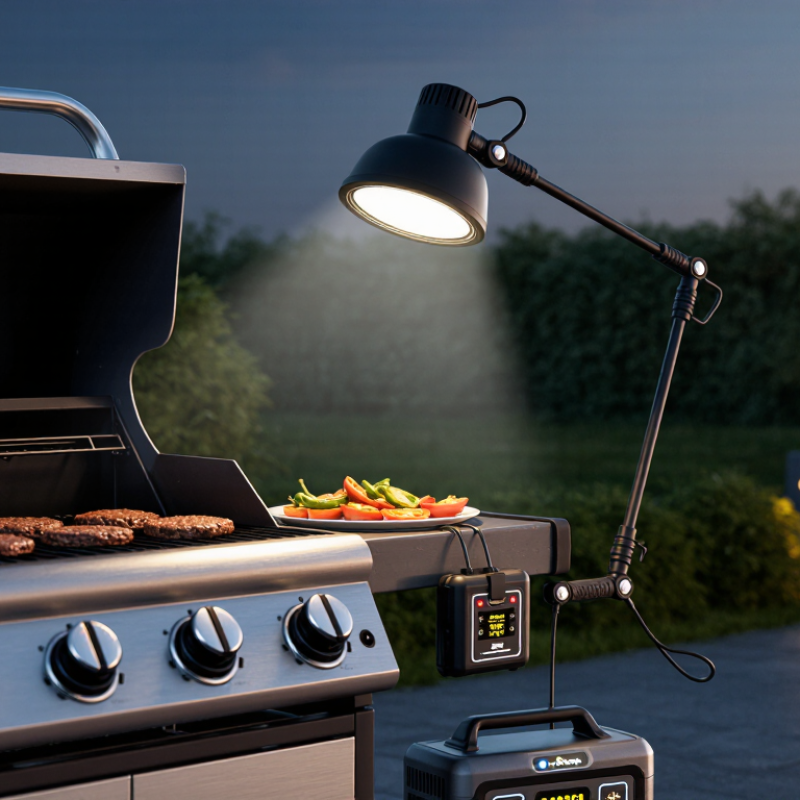
Assess Grill Size and Task Area Before Comparing Lamp Output
Before comparing brightness, measure the grill and the area where you actually handle food. A compact grill may need light over the grate, while a larger model can leave its side shelves in shadow. Note the distance from the mounting point to the cooking surface, too. Light spreads as it travels, so a lamp that looks powerful nearby may feel weak across a wide grill.
Think about what your hands need to see: the center of the grate, temperature controls, or a cutting board beside the grill. Stand in your usual cooking position and check where your body casts a shadow. That matters. A lamp aimed straight down can illuminate the food but leave controls hard to read. I would map these spots before comparing output; it is an easy step to skip, and a slightly awkward one to redo later.
Once the task area is clear, compare brightness and beam coverage against that space. A broad, even beam often works better than a very bright narrow spot, especially on a long cooking surface. Check whether the lamp can be aimed without shining into your eyes. For outdoor use, review its weather resistance and keep it within the manufacturer’s stated heat limits. More output is not always better. On a small grill, excess glare can make food look washed out and reduce comfort.
Choose a Grill Lamp by Task Area
Compare the illuminated area before choosing lamp output. This chart uses a planning target of 300 lux on the cooking or prep surface; incident lumens are calculated as area (m²) × 300 lux. Example dimensions are illustrative—measure your own task area.
The values represent light reaching the surface, not the lamp’s rated output. Choose a lamp with enough delivered light for its mounting distance and beam spread, and avoid glare while cooking.
Compare Lumens and Beam Spread for Your Cooking Distance
A grill lamp should light the food, not just look bright above it. Compare its lumen output with the distance from the fixture to the cooking grate. At roughly 18 inches, a moderate output may be enough for checking browning. Mount it 36 inches away, and the same lamp can feel noticeably dimmer. I still find distance easy to underestimate.
Beam spread matters just as much. A narrow beam concentrates light on one section of the grate, which helps when the lamp sits high. But it can leave the side shelves and far corners in shadow. A wide beam covers more area, though its light spreads out and may lose punch at longer distances. Look for an adjustable head if your mounting height or grill layout may change.
Check the beam on the actual cooking surface, if possible. Aim it at the center and edges of the grate, then look for dark patches and harsh glare on stainless steel. Useful detail. Lumens describe total light output, while lux at the grate better reflects usable brightness. Weather resistance and heat tolerance also matter, but avoid placing a lamp where direct flame or rising heat can damage it. A slightly imperfect setup is common; adjustable positioning can help correct it.
Check Color Rendering and Temperature for Clear Food Visibility
When choosing a grill lamp, check its color rendering index, or CRI, as well as its color temperature. CRI describes how accurately a light shows colors compared with natural light. A CRI of 90 or higher can make browned edges, pale chicken, and green herbs easier to distinguish. The number is useful, but it is not the whole story.
Look for a neutral white setting around 3,500 to 4,500 kelvin. Very warm light may make meat look more browned than it is, while a bluish tone can make food appear dull. Try the lamp over your actual grill, if possible. Set a steak, a piece of bread, and a leafy vegetable under it. Do their colors look believable? A quick test can reveal more than a product description. Small detail.
Brightness and placement matter, too. A high-CRI lamp aimed at shiny foil can still create glare, hiding the surface you need to inspect. Angle the beam from the side and check for harsh shadows from the hood or your hands. I would not rely on appearance alone to judge whether meat is safely cooked; use a food thermometer for that. It is easy to overvalue perfect-looking light. Still, accurate color can help you notice uneven browning before it becomes a problem.
Evaluate Weather Protection Using IEC 60529’s IPX4 Splash Rating
When choosing a grill lamp, check its IP rating before considering brightness or mounting style. Under IEC 60529, IPX4 means the enclosure is tested against water splashing from any direction. The X means no dust-protection level is specified. This rating can suit light rain or splashes near an outdoor cooking area, but it does not mean the lamp can be submerged or hit with a strong hose spray. Not waterproof. It is easy to overread the label.
Tips: Check the rating on the complete lamp, not just a detachable part. Look for covered switches, sealed cable entries, and a secure mounting point. Keep plugs and connections away from wet surfaces, and follow the maker’s cleaning instructions.
Think about where water actually lands: a roof edge may drip onto the lamp, while wind can push rain sideways. IPX4 testing offers a useful baseline, not a guarantee for every installation or years of wear. Inspect seals and housings for cracks, especially after rough weather. If the lamp sits directly beside a grill, also check its stated heat limits; splash resistance does not indicate heat resistance. A higher rating may sound safer, but fit and placement still matter.
How to Choose the Best Grill Lamp for Your Needs? - Evaluate Weather Protection Using IEC 60529’s IPX4 Splash Rating
| Selection criterion | What to look for | Why it matters | How to verify |
| Water-splash protection | An IPX4 rating under IEC 60529 or a higher, suitable water-protection rating. | IPX4 indicates protection against splashing water from any direction under the standard’s test conditions. It does not mean the lamp is waterproof or suitable for immersion. | Check the product label, instructions, or technical documentation for the complete IP rating and the standard cited. |
| Dust protection | Consider the first digit of an IP code, such as the “5” in IP54, if dust exposure is relevant. | The “X” in IPX4 means no dust-protection level is specified by that code; IPX4 alone does not establish dust protection. | Look for a separately stated first IP digit and its corresponding documentation. |
| Heat resistance | A stated operating-temperature range and installation distance appropriate to the intended mounting location. | IEC 60529 IP ratings describe protection against ingress; they do not establish resistance to grill heat or hot surfaces. | Follow the manufacturer’s temperature limits, mounting instructions, and clearance requirements. |
| Outdoor exposure | Confirm whether the lamp is intended for outdoor use and whether its instructions cover the expected exposure. | A splash rating alone does not specify resistance to prolonged weather exposure, corrosion, or every outdoor condition. | Review the stated use environment, care guidance, and any limitations on permanent outdoor installation. |
| Light coverage | Choose beam direction and mounting position to illuminate the cooking surface without obstructing the cook. | A suitable beam pattern can make food and grill controls easier to see after dark. | Check the beam description and whether the lamp can be aimed or repositioned safely. |
| Power and installation | Select a power source and mounting method compatible with the grill and the intended location. | Battery, rechargeable, and mains-powered designs have different charging, cable-routing, and installation needs. | Check power requirements, mounting compatibility, and any instructions for keeping connections protected. |
| Cleaning and maintenance | Look for clear cleaning instructions and surfaces that can be wiped without exposing electrical parts to water. | Grease and cooking residue may require regular cleaning; an IP rating does not define resistance to grease or cleaning chemicals. | Follow the specified cleaning method and disconnect or switch off the lamp as directed before maintenance. |
Note: An IP rating is not a substitute for the product’s installation, temperature, and outdoor-use instructions.
Confirm Mounting Fit, Battery Runtime, and Safety Certification
A grill lamp should fit securely before it looks bright on a product page. Measure the handle, shelf edge, or post where you plan to mount it, then compare those dimensions with the clamp or bracket. Check that the lid opens fully and the lamp stays clear of hot surfaces. Magnetic mounts need a suitable metal surface; they can disappoint on stainless steel that is not magnetic. Small detail. Big difference. A slightly loose lamp may seem harmless, until it shifts while you’re turning food.
Treat battery runtime as a real-use estimate, not a promise. Compare the stated hours with the brightness setting you will actually use, and check whether the battery can be replaced or recharged easily. For safety, look for independent certification and documentation covering the complete lamp and its intended outdoor use. If it contains lithium cells, IEC 62133-2 provides a relevant battery-safety benchmark; it does not certify the whole lamp.
NFPA’s 2023 analysis of 2017–2021 data reported an average of 11,421 home fires involving grills, hibachis, or barbecues each year. That figure is not lamp-specific, but it underlines why stable mounting and heat clearance matter.
Labels are useful. Verify the model number and certification details, because I would not rely on a logo alone.