How to Choose the Best Auto Darkening Window Film
Choosing the right Auto Darkening Window Film is not simply a matter of selecting the darkest shade. The glass, climate, vehicle design, and driving habits all influence performance. A film that looks impressive in a showroom may behave differently under winter sunlight or behind a tinted windshield. Darrell Smith, a longtime window-film specialist and former International Window Film Association representative, advises, “The right film must match the glass, the climate, and the driver’s needs.” That principle deserves attention.
Begin with the film’s switching speed, visible light transmission, ultraviolet protection, and heat-rejection rating. Ask whether the technology responds automatically or requires manual adjustment. Check the product’s installation instructions, warranty terms, and independent performance testing. Professional installers should also inspect the existing glass for scratches, stress marks, and previous tint layers. Small details matter.
Consider the interior, too. A clear film may reduce glare across a dashboard without making night driving uncomfortable. A darker option can feel cooler beside a large side window, yet it may reduce visibility after sunset. That trade-off is easy to overlook. I would also question dramatic claims about “total heat blocking,” because no film eliminates heat completely. Reliable advice should explain limits, not hide them.
This guide will compare practical features, installation quality, optical clarity, durability, and value. It will also address regional tint requirements, because responsible selection includes lawful use. Your best choice may not be the most advanced film. It should be the one that performs consistently, fits the glass correctly, and remains comfortable every day.
Understanding How Auto-Darkening Window Film Works
How to Choose the Best Auto Darkening Window Film
Understanding How Auto-Darkening Window Film Works
Auto-darkening window film changes its tint when light or electrical signals reach its active layer. Some films respond to sunlight through photochromic materials. Others use electricity, sensors, and liquid-crystal technology. The reaction is not always instant. A bright room may need several minutes to reach its darkest setting.
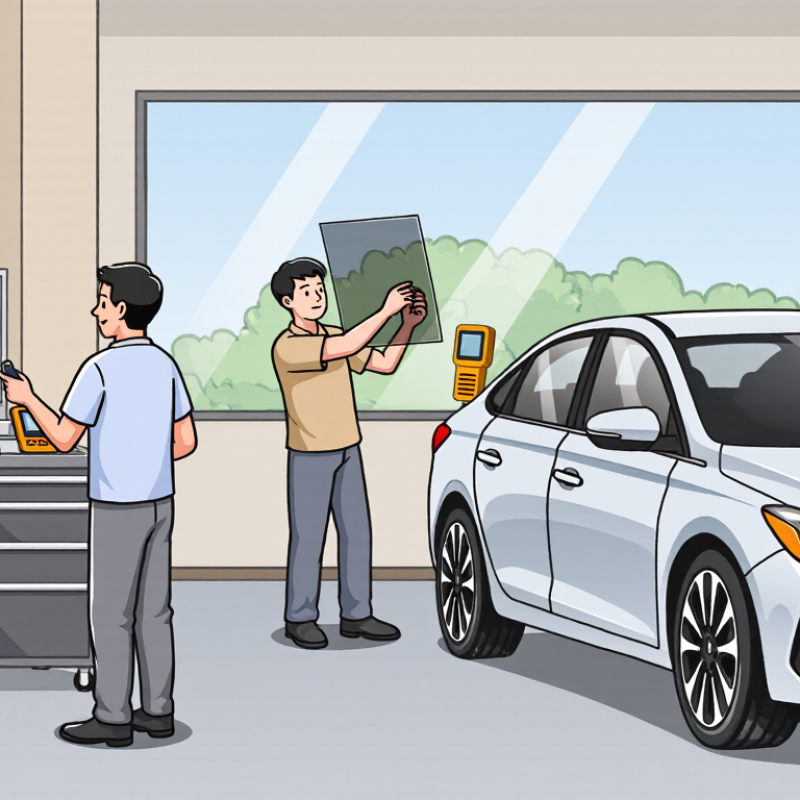
During installation tests, I look at the film’s transition speed, visible-light transmission, and heat control. A darker appearance does not always mean better performance. Some films reduce glare effectively but allow more infrared heat inside. Others provide stronger privacy while making indoor spaces feel dim. Check the technical sheet, not only the product photographs. Measurements can vary with glass type, temperature, and window direction.
Tips: Ask whether the film needs wiring or a control unit. Test one sample on the actual glass first. Watch it during morning and afternoon light. Confirm that the film suits double glazing and existing window coatings. Poor compatibility may cause bubbles, uneven tinting, or weak adhesion.
Also inspect the switching pattern. Good film should darken evenly, without cloudy patches or visible edges. I would not trust claims of “complete” heat rejection without independent test data. Real results depend on installation quality and local climate. This part is easy to underestimate. A professional installer can check electrical safety, glass stress, and long-term maintenance before the full application.
How to Choose the Best Auto Darkening Window Film - Understanding How Auto-Darkening Window Film Works
| Technology Type | How It Darkens | Typical Switching Time | Typical Visible Light Transmission | Power Requirement | Main Advantages | Important Limitations | Best Selection Use |
|---|---|---|---|---|---|---|---|
| Electrochromic | An electric charge moves ions between thin solid layers, changing the glass or film from a lighter state to a darker, tinted state. | Usually several minutes; large panels may take longer. | Commonly about 1%–60%, depending on the product and state. | Low power is generally needed during switching; many systems use little or no power to maintain a selected state. | Good glare control, gradual tint adjustment, and reduced solar heat gain when dark. | Slower response; performance can vary with temperature, panel size, and installation quality. | Homes, offices, and vehicles where gradual solar and glare control is more important than instant switching. |
| Suspended Particle Device | Electrical voltage aligns suspended particles to allow more light through; removing voltage makes the window darker. | Typically less than one second to several seconds, depending on size and temperature. | Often approximately 1%–55% across clear and dark states. | Usually requires continuous power to remain in the clear state. | Fast switching, adjustable shading, and strong glare reduction. | Higher electrical demand in the clear state; installations can be more complex and costly. | Large glazed areas requiring rapid electronic shading and frequent state changes. |
| Polymer-Dispersed Liquid Crystal | Liquid-crystal droplets align under voltage to transmit light; without voltage, the layer scatters light and appears opaque or frosted. | Usually milliseconds to a few seconds. | Clear state commonly allows about 70%–85% light transmission; the private state is light-scattering rather than truly dark. | Typically requires continuous power to remain transparent. | Very fast privacy control, smooth appearance, and easy switching. | Provides privacy more effectively than solar heat reduction; the frosted state still admits diffused light. | Bathrooms, meeting rooms, interior partitions, and areas needing instant privacy. |
| Photochromic | Light-sensitive materials darken when exposed to ultraviolet radiation and become lighter when UV exposure decreases. | Usually several minutes; fading back can take longer. | Varies widely by formulation, temperature, and UV intensity. | No external electrical power is required. | Automatic operation without wiring, switches, or control systems. | May not darken effectively behind UV-blocking glass; response depends on weather and temperature. | Simple installations where automatic, moderate tint adjustment is acceptable. |
| Evaluation Factor | What to Check | Practical Selection Guidance |
|---|---|---|
| Visible Light Transmission | The percentage of visible light passing through the film or glazing. | Choose a higher value for daylight and views; choose a lower value for stronger glare reduction and privacy. |
| Solar Heat Gain Coefficient | The fraction of solar heat entering through the window. Lower values generally mean better solar heat control. | Compare the clear and dark-state ratings rather than relying only on visible darkness. |
| Ultraviolet Protection | The percentage of UVA and UVB radiation blocked by the complete window system. | Select a product with independently tested UV-blocking performance if fading and occupant exposure are concerns. |
| Switching Speed | The time required to change from the light state to the dark state and back. | Use fast-switching technology for privacy or rapidly changing sunlight; use electrochromic systems for gradual shading. |
| Power and Controls | Voltage, wiring, control compatibility, standby consumption, and behavior during power loss. | Confirm whether the product is fail-clear or fail-dark and include wiring access in the installation plan. |
| Glass Compatibility | Glass thickness, glazing type, curvature, size, edge clearance, and existing coatings. | Obtain written compatibility confirmation before installation, especially for insulated, laminated, or curved glass. |
| Durability and Maintenance | Expected cycle life, operating-temperature range, warranty terms, cleaning instructions, and replacement process. | Choose products with documented testing and use non-abrasive cleaning methods recommended for the film surface. |
| Safety and Local Regulations | Automotive tint limits, building-code requirements, fire ratings, and electrical-safety standards. | Verify applicable regulations before purchase, particularly for windshields, front side windows, commercial buildings, and emergency exits. |
Note: Performance ranges are typical industry values and can vary by construction, window size, climate, temperature, control settings, and installation quality. Always review the manufacturer’s technical data and independent test results for the exact product.