10 Best Automated Barrier Systems for Buyers in 2026
An Automated Barrier can turn a busy entrance into a controlled, predictable checkpoint. It can also create a queue when its opening speed, arm length, or detection system does not match the site. Buyers in 2026 face more choices, from compact car-park gates to heavy-duty barriers designed for frequent vehicle movements. The right choice depends on more than the headline price.
Industry forecasts offer useful context, but they are not buying guarantees. MarketsandMarkets’ Access Control Market report estimated a global market value of USD 10.3 billion in 2023 and projected USD 15.2 billion by 2028. That broader market includes technologies beyond vehicle barriers, so the figures should not be read as barrier sales alone. They do signal sustained investment in access control. Buyers should still check the product itself: duty cycle, safety sensors, manual release, weather protection, and compatibility with existing controls.
This guide compares ten barrier systems through practical purchasing questions. How quickly does the arm open? Can local technicians service it? What happens during a power failure? Small details matter. A poorly placed photocell or an undersized cabinet can become an expensive problem. No product suits every entrance, and published specifications do not tell the whole story. Treat this shortlist as a starting point, then verify performance, warranty terms, and installation requirements with the manufacturer or a qualified integrator.
How Automated Barrier Systems Work
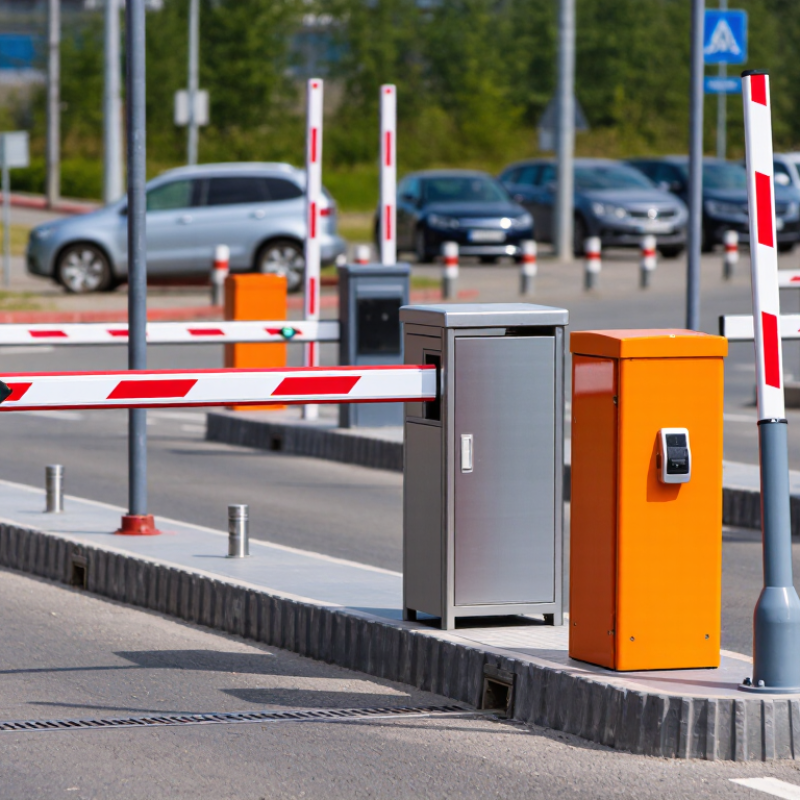
An automated barrier begins with a request: a credential, ticket, push button, or vehicle detector signals the controller. The controller checks the input, then powers a motor that lifts the arm. A counterbalance helps manage the arm’s weight. Simple sequence. On exit, a timer or another detection signal may trigger closing.
Vehicle loops buried in pavement detect changes in electrical inductance when a car passes over them. The Federal Highway Administration’s Traffic Detector Handbook describes this sensing method and its use in vehicle detection. Photoelectric sensors and pressure-sensitive devices can also help detect obstacles. A clear opening is not guaranteed, though. Poor alignment, dirt, or a badly placed loop can cause missed detections; installers need to test the full approach and closing path.
The wider access-control market offers useful context, but it is not a barrier-gate forecast. MarketsandMarkets estimated that market at $10.4 billion in 2023, with a projection of $15.2 billion by 2028. That points to rising investment in connected entry systems. It does not prove every site needs a networked barrier. Review event logs, opening speed, vehicle length, and safety-device checks during routine maintenance. Small details matter. An attractive arm can still be the wrong choice if queues routinely block its sensors.
10 Best Automated Barrier Systems for Buyers in 2026 - How Automated Barrier Systems Work
Compare these common system types by how they operate, where they are typically used, and what to consider when selecting one. Suitability depends on site conditions, traffic, safety requirements, and local regulations.
| System type | How it works | Typical applications | Advantages | Key considerations | Common access and safety options |
|---|---|---|---|---|---|
| 1. Automatic boom barrier | An electric motor raises and lowers a horizontal arm to control vehicle passage. | Parking entrances, residential driveways, and controlled access lanes. | Clear visual indication and straightforward lane control. | Arm length, wind exposure, duty cycle, and lane width affect selection. | Keypad, card reader, vehicle loop detector, photoelectric sensor, and manual release. |
| 2. Folding-arm barrier | A jointed arm folds as it opens, reducing the vertical clearance needed above the barrier. | Indoor parking facilities, garages, and entrances with low overhead clearance. | Can operate where a full-length straight arm would be obstructed by a ceiling or structure. | The folding mechanism needs suitable clearance and routine inspection. | Access reader, loop detector, obstruction sensing, and emergency release. |
| 3. High-duty-cycle boom barrier | A powered arm opens and closes repeatedly; the operator is selected for frequent operation. | Busy parking facilities, commercial sites, and access lanes with frequent vehicle movements. | Designed for heavier use than a system intended for occasional operation. | Confirm the rated operating cycle, maintenance schedule, and expected traffic volume with the installer. | Vehicle detection, safety sensors, status indicators, and monitored access controls. |
| 4. Automatic rising bollards | Vertical posts rise from and retract into ground-level housings to restrict vehicle access. | Pedestrian zones, building entrances, and sites requiring access control without a swinging arm. | A compact footprint when retracted and no overhead arm across the lane. | Requires suitable foundations, drainage, and access for servicing below ground. | Credential reader, traffic signals, vehicle detection, and emergency operation provisions. |
| 5. Automatic road blocker | A powered roadway platform or blocking element rises from a recessed foundation to prevent vehicle passage. | Restricted vehicle entrances where a substantial physical access-control measure is needed. | Can provide a more substantial physical obstruction than a standard access arm. | Requires civil works, drainage, careful traffic planning, and a site-specific security assessment. | Access control, traffic lights, vehicle detection, and coordinated emergency procedures. |
| 6. Automatic wedge barrier | A wedge-shaped barrier rises from a roadway recess to block vehicles at a controlled entrance. | Sites requiring a vehicle barrier integrated into the road surface. | Retracts below or near road level when access is permitted, depending on the design. | Foundation design, drainage, road layout, and access for maintenance are important. | Traffic signals, vehicle presence detection, access credentials, and emergency controls. |
| 7. Automatic sliding gate | A powered gate moves horizontally along a track or a cantilevered support to open or close an entrance. | Residential, commercial, and industrial vehicle entrances with space beside the opening. | The gate does not swing into the driveway or roadway. | Needs lateral space, a suitable foundation, and safeguards around moving and trapping points. | Photocells, safety edges, intercom, keypad, and vehicle detection. |
| 8. Automatic swing gate | One or two powered leaves rotate on hinges to open and close the entrance. | Driveways and entrances with adequate space for the gate leaves to swing. | Can suit sites where a sliding gate cannot move sideways along the boundary. | Check swing clearance, ground slope, wind loading, hinge condition, and pedestrian safety. | Photoelectric sensors, safety edges, access keypad, intercom, and manual release. |
| 9. Automatic telescopic sliding gate | Multiple connected gate sections slide and overlap to reduce the side space needed when open. | Vehicle entrances where a conventional sliding gate lacks sufficient run-back space. | Provides a wide opening with a shorter overall travel area than a single sliding leaf. | More moving components require correct alignment and regular maintenance. | Safety photocells, protective edges, access reader, and vehicle presence detection. |
| 10. Integrated gate-and-barrier system | A powered gate provides the main physical closure while an access barrier or control device manages vehicle flow. | Managed entrances with separate entry authorization, traffic control, or layered access procedures. | Combines a physical gate with lane-level access control in one coordinated layout. | Controls must be properly coordinated to prevent conflicting movements or unsafe operation. | Interlocked controls, credential readers, vehicle detection, safety sensors, and emergency release. |
Buyer tip: Before purchasing, verify the system’s suitability for the site, expected traffic, opening dimensions, power supply, weather exposure, safety provisions, maintenance access, and applicable local standards with a qualified installer.