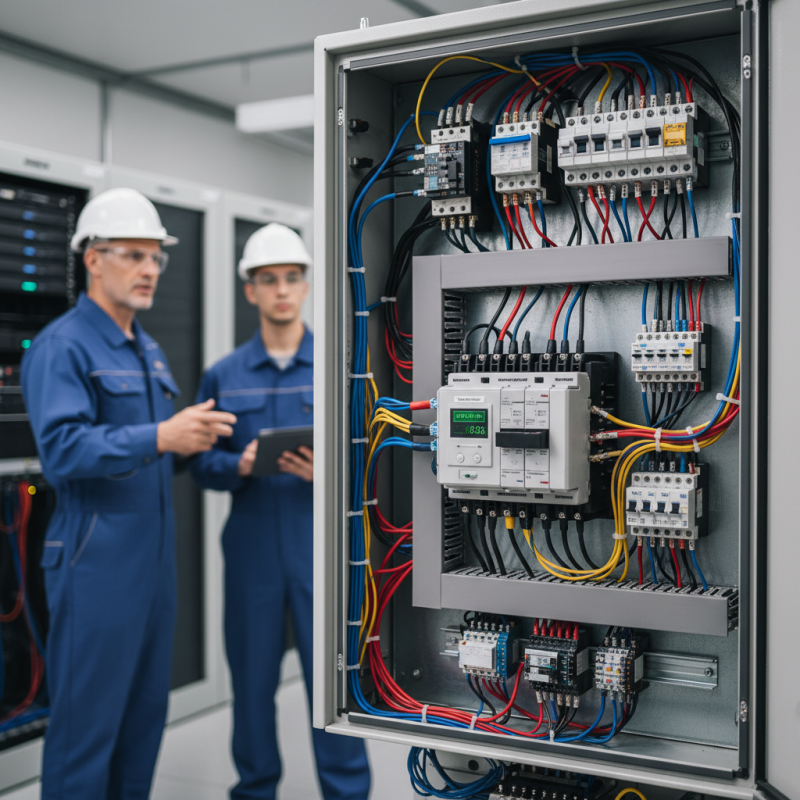
What is an Automatic Transfer Switch and How Does It Work?
An Automatic Transfer Switch (ATS) is a crucial component in modern power management. It seamlessly switches power supply when the main source fails. John Smith, an industry expert with over 20 years of experience, states, "An ATS is vital for ensuring uninterrupted power supply during outages."
These devices monitor power sources continuously. When a power failure occurs, the ATS detects it and activates backup generators. This quick response minimizes downtime, especially for critical infrastructure. Businesses rely on ATS for maintaining operations and ensuring safety.
However, ATS systems are not without their challenges. Selection and installation require expert knowledge to avoid common pitfalls. Regular maintenance is essential for reliable performance. Users must reflect on their specific power needs and system compatibility to enhance reliability.
What is an Automatic Transfer Switch?
An Automatic Transfer Switch (ATS) is a critical component in power management systems. It automatically switches the power source from the main grid to a backup generator during outages. When the main power fails, the ATS detects the interruption and quickly activates the generator. This seamless transition reduces downtime and enhances reliability in various settings.
The design of an ATS varies based on its application. Some serve residential needs, while others cater to commercial installations. The switch may include features like surge protectors, sensors, and control panels. Typically, these systems need regular maintenance. Neglecting this can lead to failure during emergencies. It’s essential for users to monitor the condition of the ATS to ensure it works efficiently when needed.
Yet, there are challenges in utilizing an ATS effectively. Misconfigurations or lack of proper installation can pose risks. Operators must be trained to understand how the system functions. Relying too heavily on automation might lead to complacency. Regular training and understanding are crucial. Investing time in learning the system can prevent unexpected outages.
The Components of an Automatic Transfer Switch
An Automatic Transfer Switch (ATS) is vital in managing power supply. Its main role is to switch between the main power source and a backup generator without human intervention. Understanding its components helps in grasping its functionality.
Central to an ATS are its relays and control circuits. Relays detect power loss. They respond quickly, ensuring minimal downtime. The control circuit oversees this entire process, managing the timing and sequencing of power restoration. Each component must work flawlessly together. If one fails, the switch may not operate as intended.
Sensors also play a significant role. They continuously monitor voltage levels. If they detect a drop, activation occurs automatically. These sensors must be precise to avoid unnecessary generator runs. Regular maintenance is crucial. Dust and wear can lead to inaccuracies in readings. Over time, components may degrade, requiring replacement or recalibration. This highlights the importance of routine checks. Each part needs attention. Without proper care, an ATS might not serve its purpose effectively. The risks can be significant during outages.
How an Automatic Transfer Switch Operates
An Automatic Transfer Switch (ATS) is essential for managing power supply. It detects when utility power fails. Then, it quickly shifts to backup power sources, like generators. This function is critical for businesses and homes that need continuous electricity. When power is restored, the ATS seamlessly switches back to the utility supply. This process prevents interruptions and protects equipment.
In operation, the ATS uses sensors to monitor voltage and frequency. When it senses a disturbance, it activates the generator within seconds. This rapid response minimizes downtime. Many people underestimate the importance of regular maintenance for an ATS. Without it, the system may fail when needed most. Failing to inspect connections and settings can lead to losses or damage.
The technology behind an ATS is impressive but not foolproof. Environmental factors, like temperature and humidity, can impact its performance. Understanding these limitations is vital for users. Regular checks can help maintain reliability. Ultimately, an ATS enhances power resilience, provided it is well cared for. Consistency in maintenance and monitoring is key to ensuring long-term functionality.
What is an Automatic Transfer Switch and How Does It Work?
| Feature | Description | Functionality |
| Purpose | Automatically switches power supply from a primary source to a backup source. | Ensures continuous power during outages. |
| Activation | Triggered by sensing a power failure in the utility supply. | Detects voltage loss and initiates switch. |
| Types | Open Transition, Closed Transition, and Smart Transfer Switches. | Different switching methods for varied applications. |
| Control Mechanism | Typically uses relays or contactors integrated with microcontrollers. | Manages the switching process automatically. |
| Applications | Used in residential, commercial, and industrial facilities. | Provides backup power for critical systems. |
| Safety Features | Includes overload protection and fault detection. | Minimizes risk of equipment damage during switch. |
Benefits of Using an Automatic Transfer Switch
An Automatic Transfer Switch (ATS) plays a crucial role in ensuring reliable power supply. It automatically switches the power source from the grid to a backup generator during an outage. This seamless transition protects critical systems and maintains operations without manual intervention. Such devices are essential for hospitals, data centers, and other facilities that require constant power.
Using an ATS offers several benefits. It enhances operational efficiency by reducing downtime. The automatic nature of the switch means that power is restored quickly, often within seconds. This can be vital for sensitive equipment that cannot afford interruptions. Additionally, an ATS often includes monitoring features, allowing for real-time assessments and alerts for maintenance. This proactive approach can extend the lifespan of both the switch and the connected equipment.
However, there are considerations to keep in mind. Installation requires careful planning and professional expertise. Improper setup may lead to inefficiencies or, worse, equipment damage. Regular maintenance is also necessary to ensure reliability. Users must remain aware of potential power surges and system limits. Properly assessing power needs is crucial for effective use of an ATS.
Common Applications of Automatic Transfer Switches
Automatic Transfer Switches (ATS) play a crucial role in various scenarios where reliable power supply is essential. One common application is in healthcare facilities, where continuous power is vital for life-saving equipment. An ATS ensures that backup generators activate promptly during a power outage, preventing any interruption to critical services.
Another significant application is in commercial buildings. Businesses rely heavily on technology and computerized systems. An ATS can provide seamless power transfer, reducing downtime. This is particularly important in data centers, where power loss can lead to data corruption and financial losses.
Residential setups are also benefiting from ATS technology. Homeowners often install these switches to safeguard against power outages. An automatic transfer switch can detect a power failure and switch to a generator within seconds, providing peace of mind. However, selecting the right ATS requires careful consideration of the household’s power needs and generator capacity. Striking a balance between efficiency and reliability is essential and can lead to costly mistakes if neglected.
Power Source Reliability: Automatic Transfer Switch Applications